
Irida Health is deeply committed to scientific research. We believe that rigorous scrutiny by world experts is essential for ensuring that technologies are accurate, reliable, acceptable, and useful
 Anxiety
Introducing the anxiety test - a novel, test for reporting levels of anxiety in everyday scenarios
 Distortions
manuscript(s) in preparation
 Earcatcher
manuscript(s) in preparation
 Eyecatcher
Validating Eyecatcher (v3) as a case finding tool in Nigeria
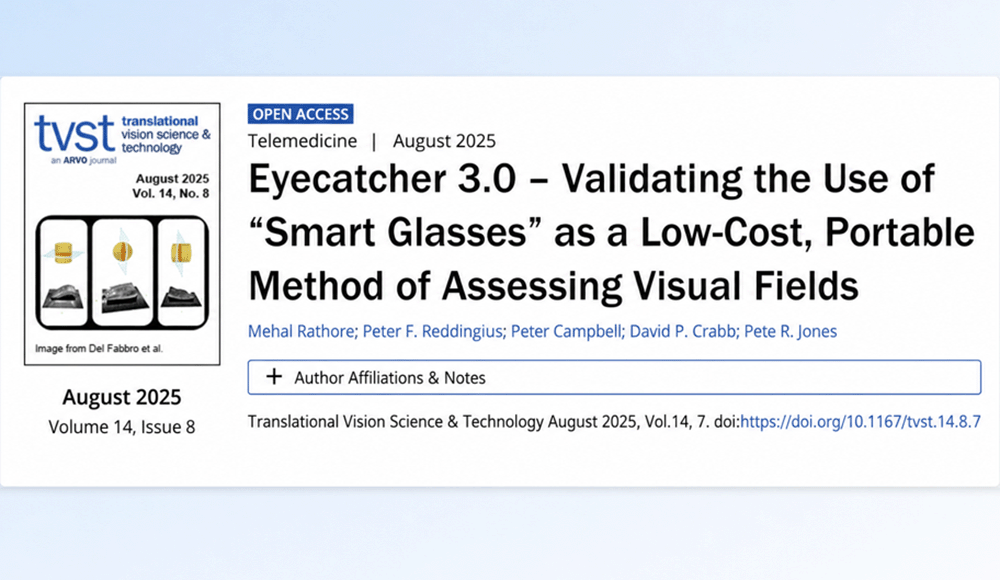
Validating the world's first smartglasses based perimeter (Eyecatcher v3), for a lighter weight, less expensive, and more easily controllable system
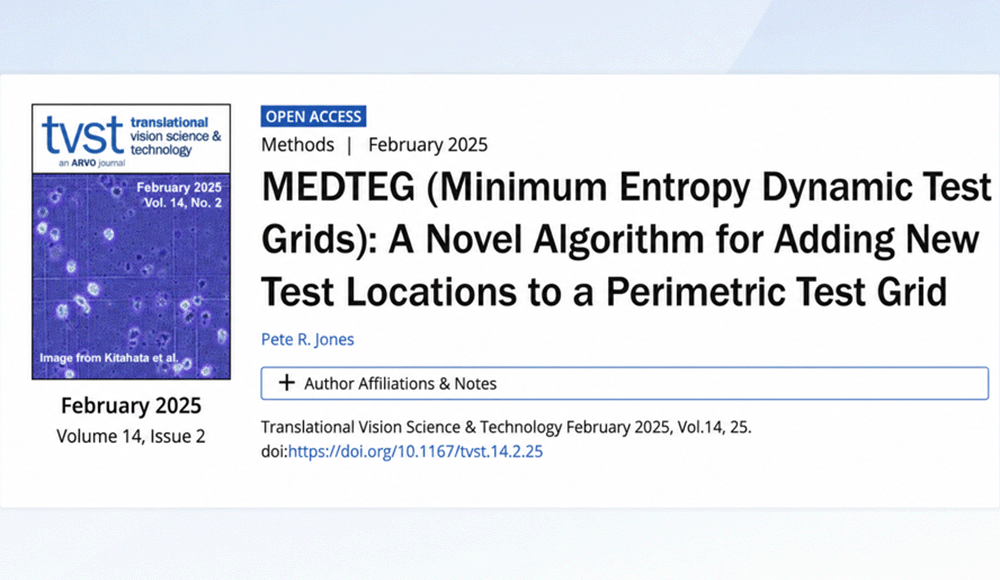
A novel algorithm for dynamic test grid determination
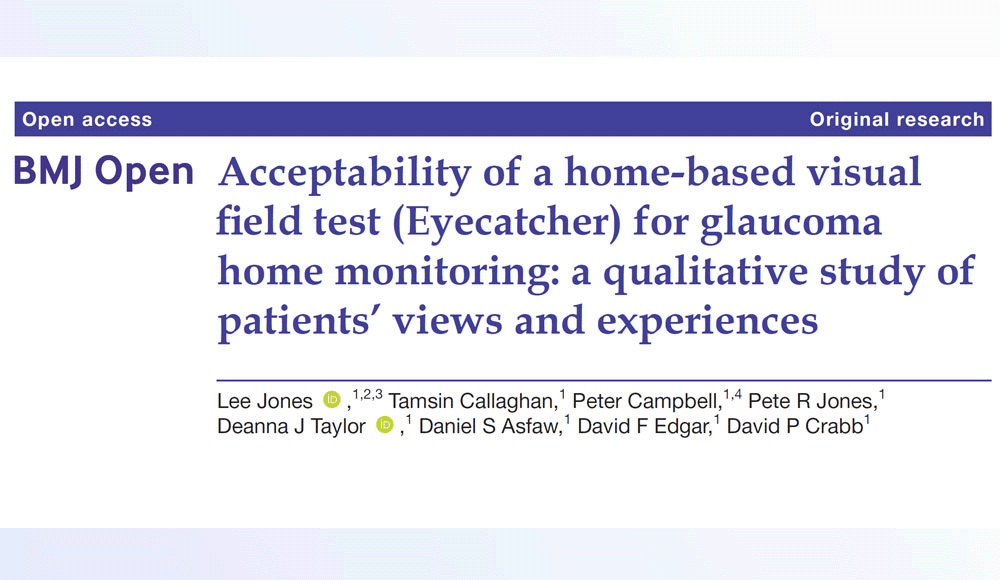
Views of glaucoma patients on the pros and cons of Eyecatcher (v2), and on vision home-monitoring in general
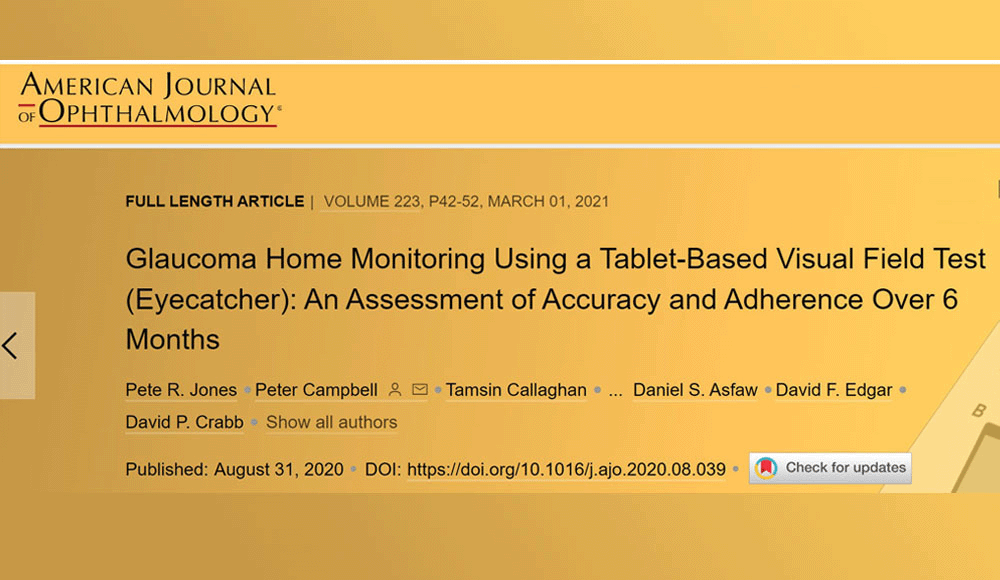
Glaucoma patients are able to accurately measure their own vision at home for 6-months using Eyecatcher (v2)
Eyecatcher (v1) can be used to rapidly triage patients whilst they sit in glaucoma waiting rooms
Machine learning and computer vision techniques can be used to detect lapses in concentration
Eyecatcher (v1) is able to accurately map out the visual field of young, normally sighted adults
How advanced computer monitors with integrated photometers can be used to run Eyecatcher without any prior calibration
Eyecatcher (v1) is able to accurately map out the visual field of glaucoma patients
 Face Recognition
Showing that Face Recognition can be used to assess diabetic patients directly within the waiting room
Describing the novel Face Recognition test, and providing normative response-time data for normally sighted young adults
Background research demonstrating that people with glaucoma exhibit abnormal eye movements during face recognition tasks
Background research demonstrating that people with advanced glaucoma are more likely to experience problems with recognising faces
 Form and Motion
Further investigations of spatial averaging in normally sighted children aged 6 to 11 years
Introducing the spatial averaging task
 Fragmented Letters
Introducing a rapid fragmented-letter test for detecting cortical visual loss and distinguishing it from common eye conditions
 Hyperacuity
manuscript(s) in preparation
 Near Acuity
manuscript(s) in preparation
 PopCSF
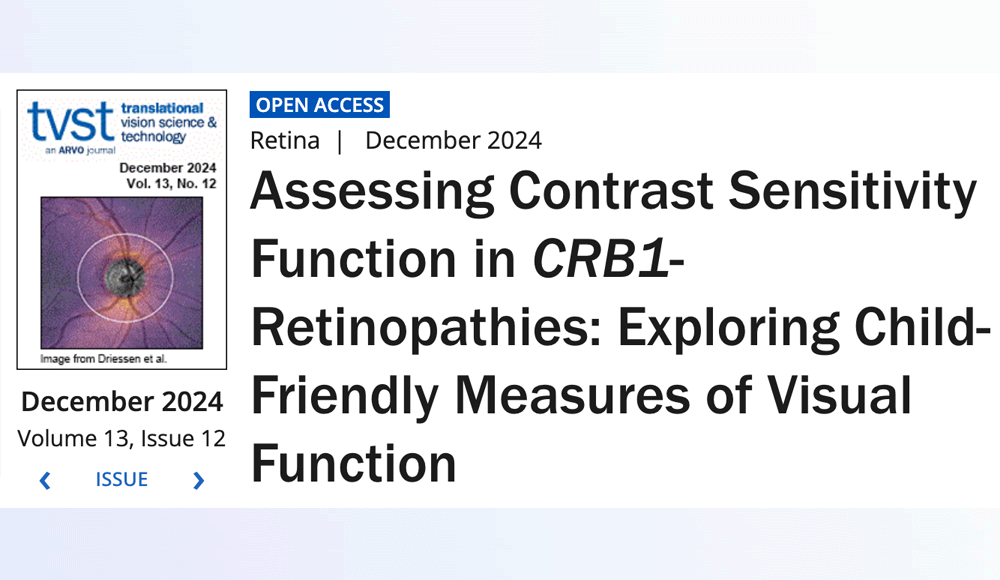
Using PopCSF to measure contrast sensitivity across spatial frequencies in children and adults with CRB1-associated retinal disease
Using PopCSF to quantify visual improvement following gene therapy in children with AIPL1-associated severe retinal dystrophy
Assessing PopCSF's potential as a way of monitoring children's vision at home
Introducing the PopCSF test - a novel, child-friendly test of contrast sensitivity and acuity
 Roadsign Detection
Showing that people with more severe AMD take longer to identify road signs in simulated driving scenes
 Visual Search
Showing that people with more severe AMD take longer to find everyday objects in visually crowded scenes
Showing that Visual Search can be used to assess diabetic patients directly within the waiting room
Describing the novel Visual Search test, and providing normative response-time data for normally sighted young adults
 VR Shopping
manuscript(s) in preparation
More
For a further 150 publications authored by the Irida Team, see here and here